
Quick Look:
- Does PPF Thickness Really Matter?
- What Does "mil" Actually Mean?
- What A Thicker PPF Can Do
- Installation Matters Just As Much
- What Should You Compare
- Our Approach
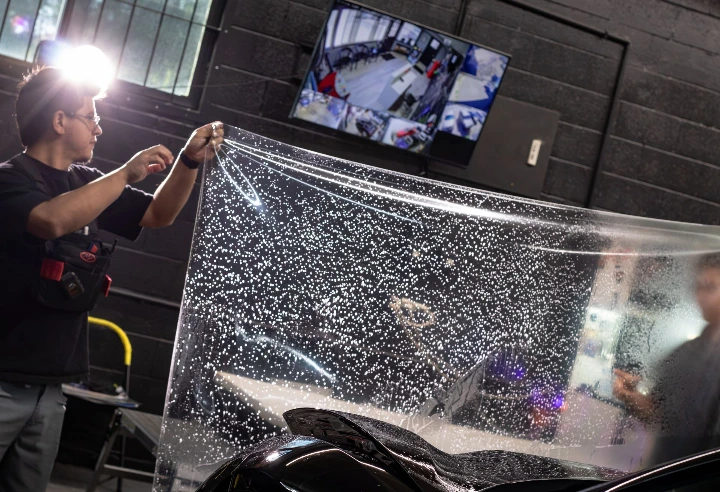
If you're reading this, I'm willing to bet you're doing your homework.
You've probably looked at a few different paint protection film shops, compared warranties, read reviews, maybe even asked Reddit, and somewhere along the way you came across one of the most talked-about specs in the PPF world: film thickness.
Maybe you've even started asking shops, "How thick is the film you use?"
It's a great question.
In fact, we've gotten that question a few times.
But here's what I'd like you to know before you make your decision:
Thickness matters, but it isn't the whole story.
A thicker film can absolutely provide more protection in certain situations. But focusing only on thickness is a little like buying a truck based only on horsepower. It's one important specification, but it doesn't tell you how the entire package performs.
Does PPF Thickness Really Matter?
If you've been researching paint protection film (PPF), you've probably seen shops advertising 8 mil, 10 mil, or even thicker films.
It's a fair question to ask: Does a thicker film provide better protection?
The short answer is yes... to a point.
Thickness does matter. But it isn't the only thing that determines how well a paint protection film performs. In fact, focusing only on thickness can cause you to overlook several factors that are just as important.
Or, to put it another way...
Thickness is important, but it's what the film does with that thickness that really matters.
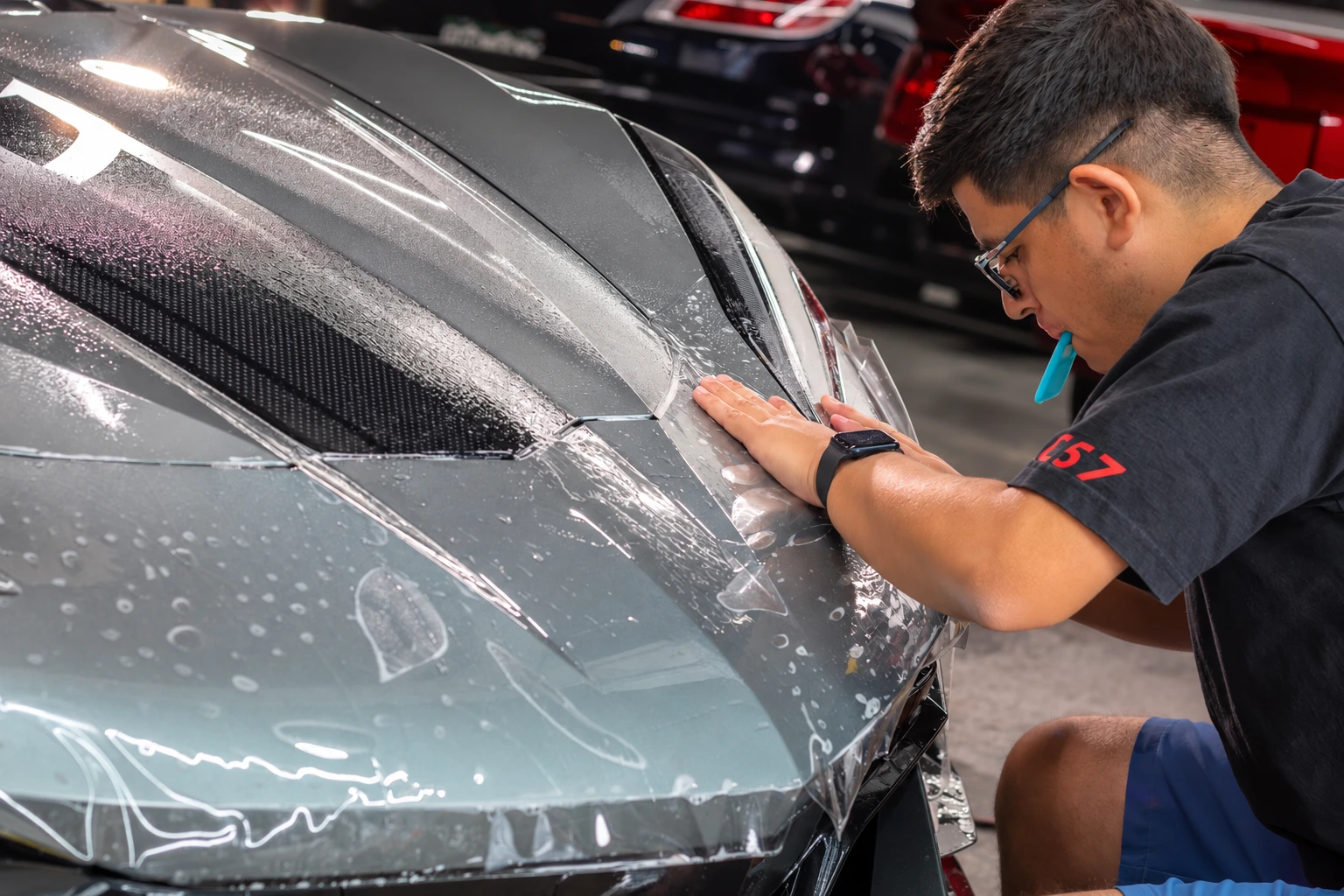
What does "mil" actually mean?
When people talk about PPF thickness, they're usually referring to mils, not millimeters.
One mil equals one-thousandth of an inch (0.001"). Most modern paint protection films fall somewhere between 6 and 12 mils thick, depending on the manufacturer and product.
That may not sound like much, but a few thousandths of an inch can make a noticeable difference when it comes to absorbing everyday road debris.
What a thicker PPF can do
Generally speaking, a thicker film can offer:
- Better resistance to rock chips
- More protection from road debris
- Increased durability against everyday wear
- A little more impact absorption
These are all real advantages, especially if you spend a lot of time driving on highways or gravel roads.
So yes, thickness absolutely has value.
But thickness doesn't tell the whole story
Imagine comparing two work boots.
If one boot has a thicker sole, does that automatically make it the better boot?
Not necessarily.
You'd probably also care about the materials, comfort, durability, stitching, grip, and how well they're made.
Paint protection film works the same way.
Two films can both be 8 mil thick and perform very differently because thickness doesn't tell you anything about:
- Adhesive quality
- Self-healing ability
- Optical clarity
- Resistance to yellowing
- Hydrophobic properties
- How well the film conforms around curves
- Manufacturer warranty
- Long-term durability
These characteristics have a huge impact on how the film performs over the next five, seven, or even twelve years.
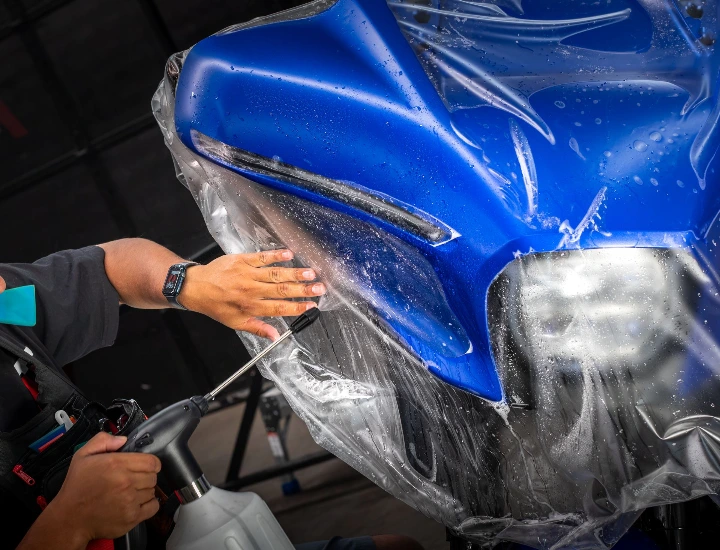
Installation matters just as much
Even the best film on the market won't perform well if it isn't installed properly.
A poor installation can leave visible edges, trapped contamination, lifting corners, or areas that don't adhere correctly.
On the other hand, a quality installation allows the film to protect your vehicle while remaining nearly invisible.
That's why we believe the installer is every bit as important as the product itself.
Is thicker always better?
Not necessarily.
Every film is designed to balance protection, flexibility, clarity, and ease of installation.
Some films are engineered to be slightly thicker for maximum impact resistance. Others prioritize exceptional clarity or conformability around complex curves without sacrificing protection.
The goal isn't simply to choose the thickest film available.
The goal is choosing a film that performs well as a complete system.
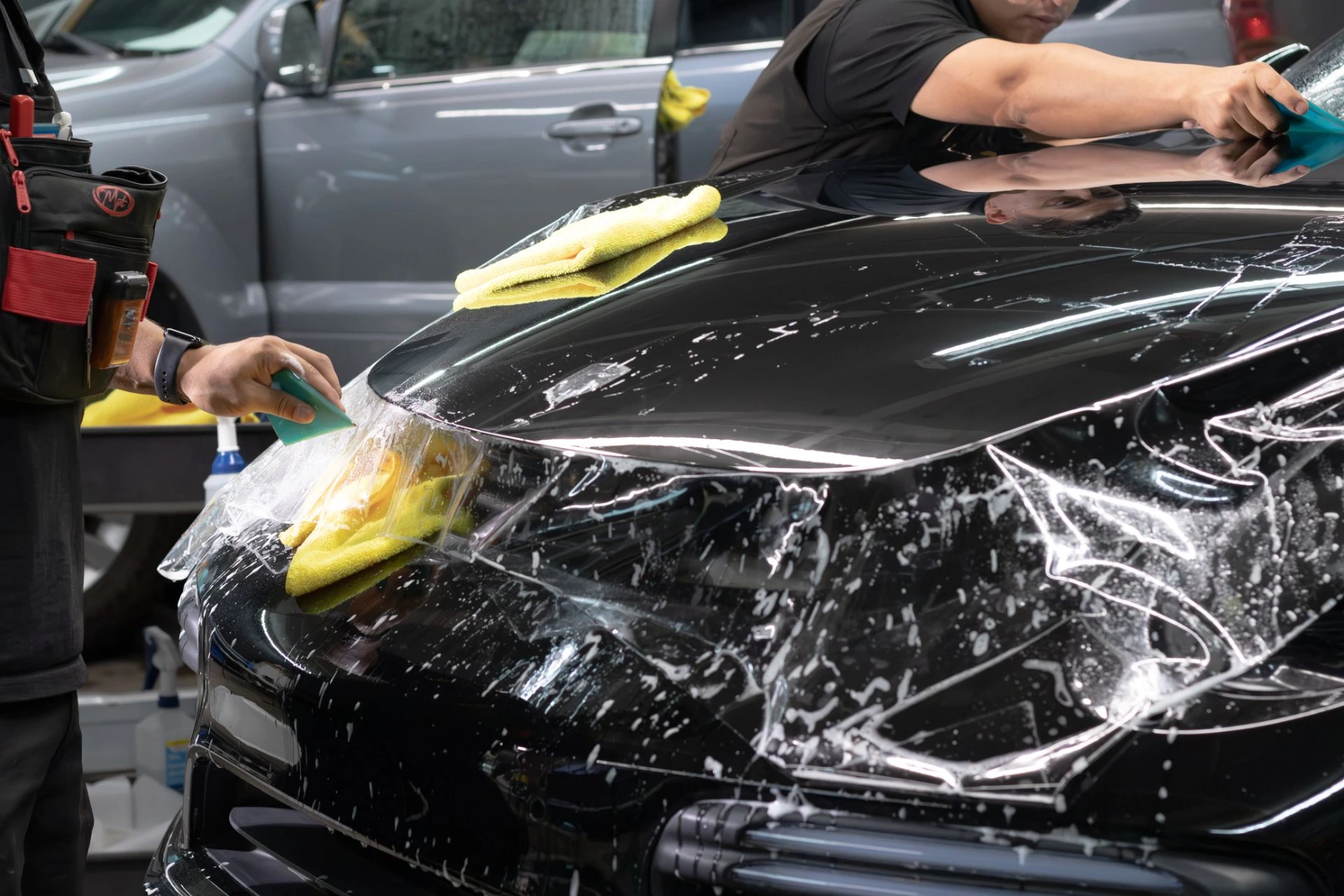
So what should you compare?
If you're getting quotes from different shops, don't stop at asking, "How thick is your PPF?"
Also ask:
- What brand of film do you install?
- How does it perform over time?
- Does it self-heal?
- What does the warranty cover?
- Why did you choose that particular film?
- Who will actually be installing it?
The answers to those questions will tell you far more than a single number ever could.
Our Approach
At Pro-Tech Auto Shield, we don't choose paint protection film simply because it's the thickest.
We choose products based on how they perform in real-world conditions, how well they install, how they hold up over time, and how confidently we can stand behind them.
Thickness is one part of that decision.
Experience, quality, and proper installation are the rest.
If you're comparing different PPF options and aren't sure what actually matters, we're always happy to answer your questions. Whether you choose us or not, we'd rather you make an informed decision than one based on marketing alone.