
Quick Look:
- What Exactly is PDR?
- Steel vs Aluminum: Why the Material Matters
- Navigating Insurance
- Don’t Let Dents Diminish Your Vehicle’s Value
If you live in the Denver area, you know the sinking feeling of a sudden afternoon hail storm can be after it leaves your car looking like the surface of the moon. Whether it’s a major hail event or just a stubborn door ding from a cramped parking lot, seeing damage on your vehicle is always frustrating.
At Pro-Tech Auto Shield, we understand that vehicle damage is frustrating. That's why we focus on Paintless Dent Repair (PDR), which is the most effective and least invasive way to restore your car. With PDR, you can avoid the hassle of invasive sanding, using plastic body fillers, or the difficult process of trying to perfectly match new paint to your vehicle's factory finish.
What Exactly is PDR?
In a traditional body shop, a technician will often grind away your car’s factory finish, drill holes, or use heavy plastic fillers (like Bondo) to bridge a gap, followed by layers of aftermarket paint that may never truly match. It’s an invasive, “old-school” process that fundamentally changes the exterior of your vehicle.
PDR takes a completely different approach by leaning into the science of the metal itself.
Believe it or not, your car’s body panels actually have a “memory.” Think of your car’s body panels like a very stiff spring. When a hailstone or a car door hits your vehicle, it doesn't just "dent" the metal, it puts it under a massive amount of tension.
The metal is essentially "holding its breath," trapped in that new, bent shape. It naturally wants to return to the smooth, flat form it had when it left the factory. A PDR technician’s job is to find the “pressure points” that are keeping that dent locked in place. By giving the metal a series of precise, gentle nudges, we release that tension and allow the panel to “relax” back into its original shape.
Depending on where the damage is located, PDR specialists use two primary methods to restore the surface:
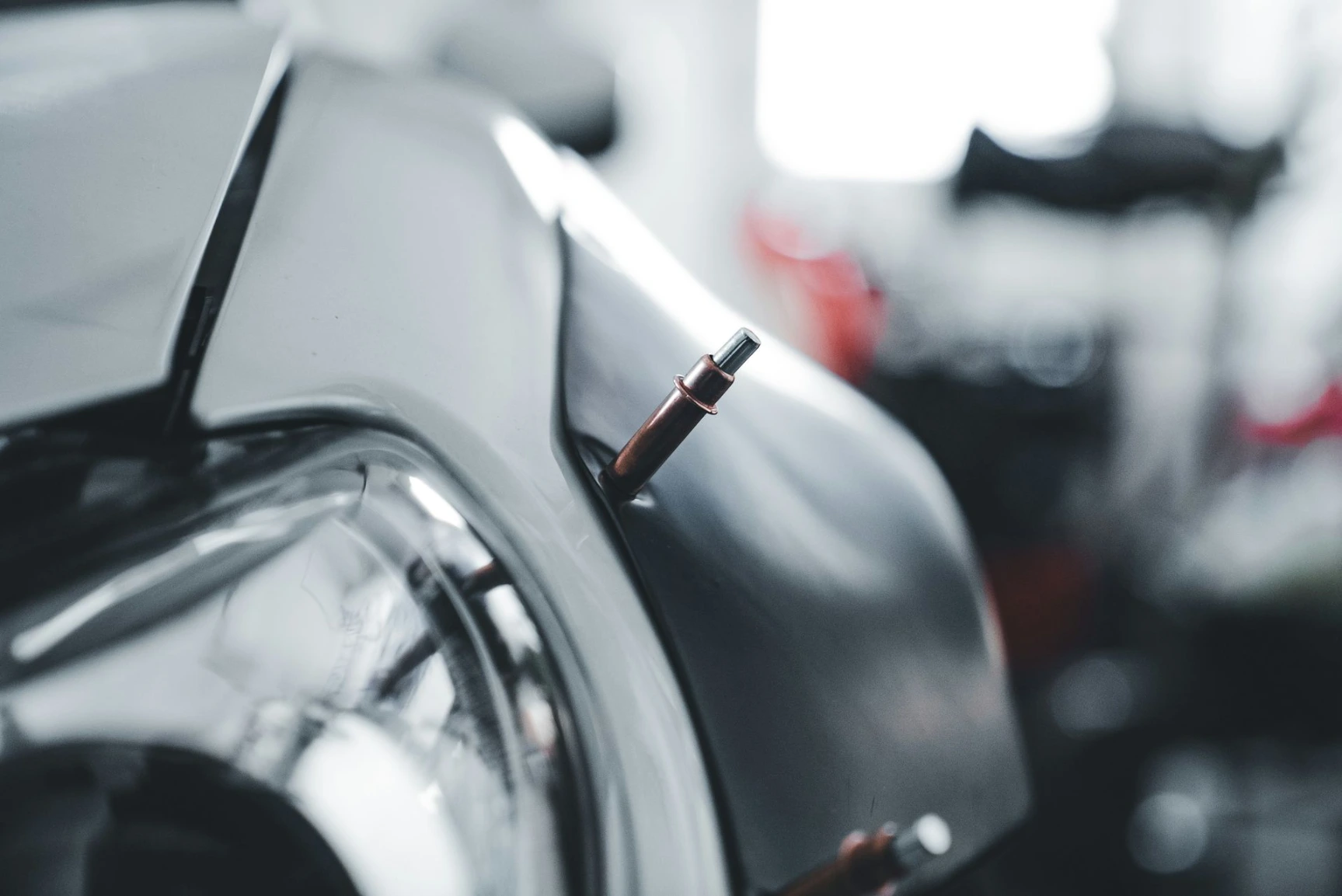
Internal Massaging (Rod Sets): Whenever possible, they use specialized stainless steel rods of various lengths and curvatures to reach behind the damaged panel. Whether it’s an open area like a hood or a tight spot inside a fender, these tools allow them to gently push the dent out from the inside, leaving your exterior paint completely untouched.
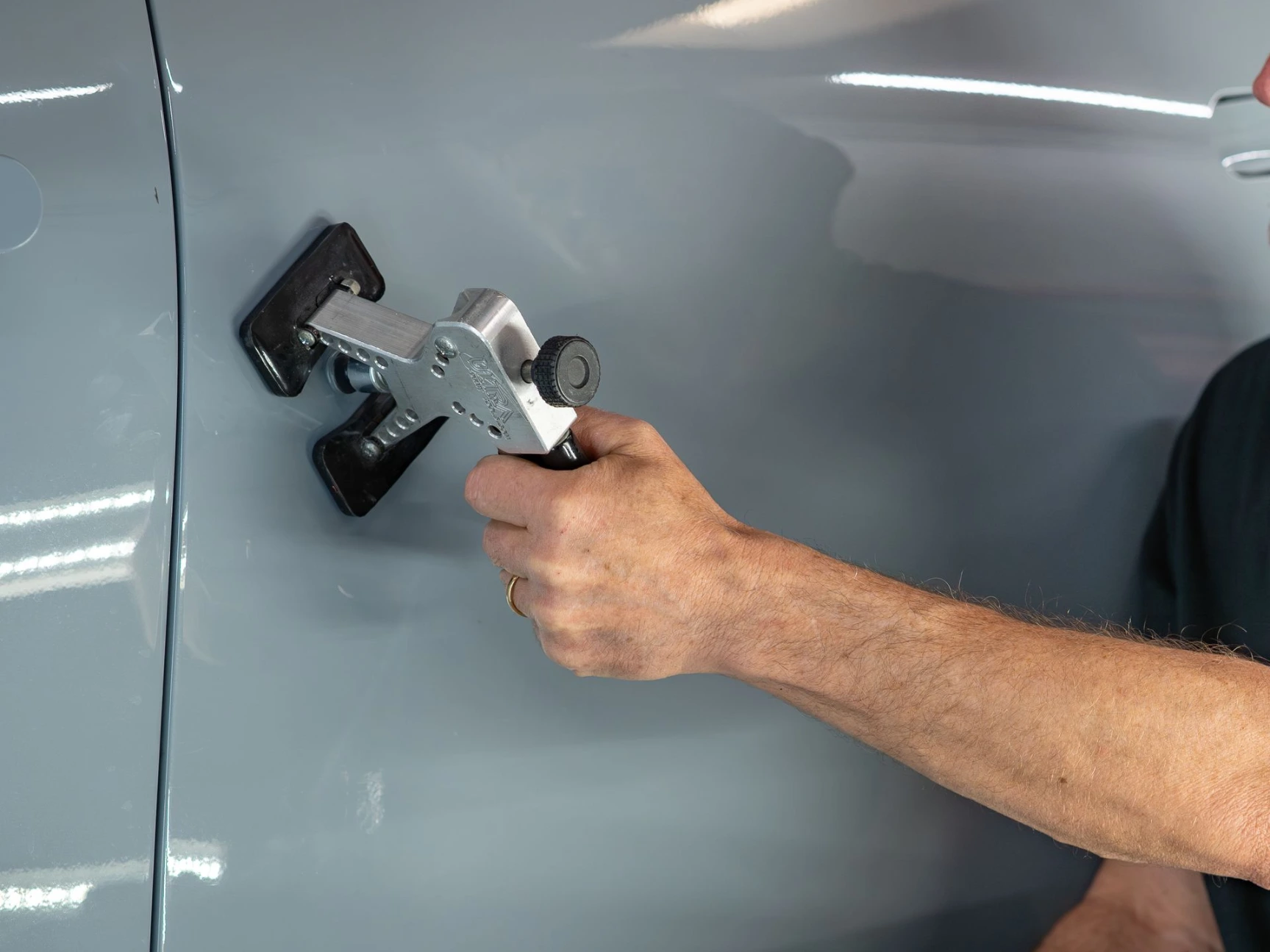
External Precision (Glue Pulling): Sometimes, a dent is located in a "double-walled" area or behind a structural brace where they can’t get behind the metal. In these cases, they use a specialized glue-pulling system. They apply a temporary, mild adhesive and specialized tabs to the front of the dent, then use a slide hammer or lifting tool to pull the metal back to level.
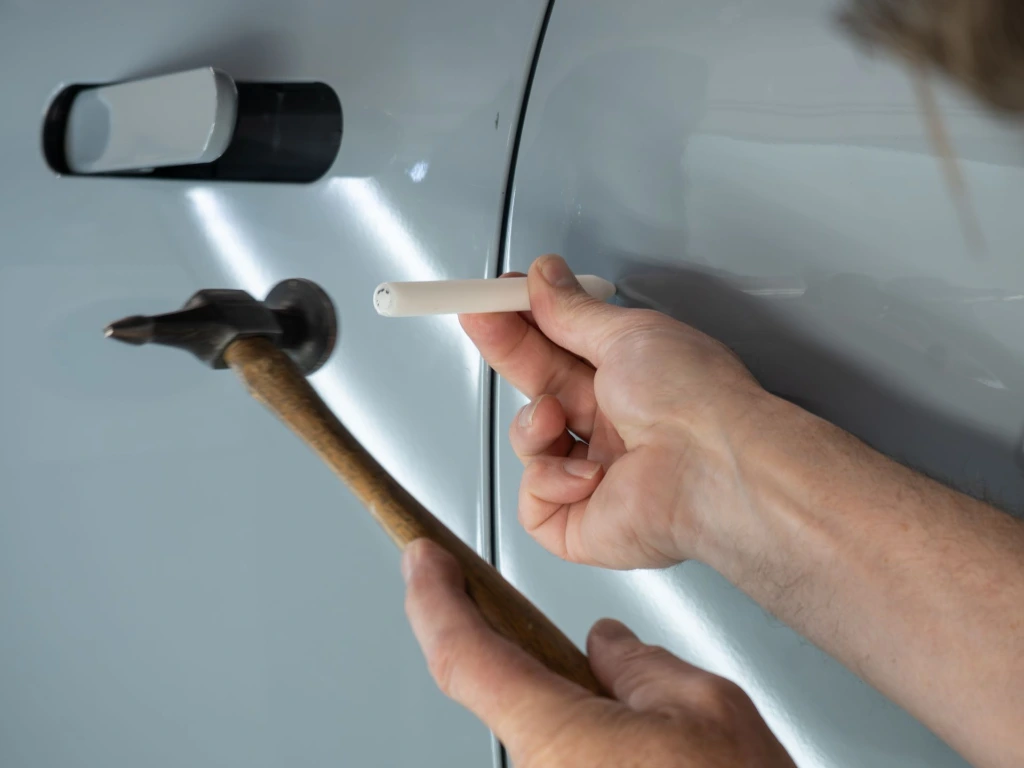
- The Finishing Touch: Once the main dent is raised, the work isn't over. The specialists will then use “knockdown” tools and precision PDR hammers to tap down any tiny high spots or uneven textures. This fine-tuning is what separates a “visible repair” from a professional restoration. This leaves the surface of your vehicle looking smooth and reflective.
Steel vs Aluminum: Why the Material Matters
While PDR is highly effective for almost any vehicle, the technique changes depending on what your car is made of. Most modern vehicles use a blend of high-strength steel and aluminum.
Each material requires a unique approach:
The Elasticity of Steel: Steel is naturally elastic and possesses a strong "memory." This makes it very receptive to being massaged back into its factory form using precision rod sets.
The Precision of Aluminum: Aluminum is lighter and stiffer, meaning it lacks that natural "spring-back" quality found in steel. It requires more patience, specialized toolsets, and careful heat management to manipulate without causing damage.
If your vehicle has aluminum panels, don’t be discouraged, PDR is actually still the best choice for dent removal.
Traditional body shops often struggle with aluminum because it reacts poorly to the high heat used in welding or the aggressive sanding required for "filler" repairs. If over-manipulated, aluminum can suffer from "work hardening," which makes the metal brittle and prone to cracking.
Quality PDR helps bypass these risks. By using slow, controlled massage techniques, technicians preserve the structural integrity and corrosion resistance of the panel.
Dealing with a damaged vehicle is stressful enough; dealing with insurance adjusters shouldn't be. When starting the insurance process, hail damage is typically covered under comprehensive insurance.
We regularly work with insurance claims and can assist with:
Initial damage assessment
Documentation for your adjuster
Repair planning
Our role is to repair the vehicle correctly and keep you informed throughout the process.
Don’t Let Dents Diminish Your Vehicle’s Value
Whether you’re dealing with the aftermath of a Colorado hail storm or a frustrating door ding, you don’t have to guess about the best way to fix it. At Pro-Tech Auto Shield, we’re here to give you a clear, honest assessment of what can be restored and the most effective way to do it.
Ready to Get Started?
Schedule a Professional Inspection: Bring your vehicle by our shop at 11114 W 44th Ave in Wheat Ridge for a thorough, in-person evaluation.
Send Photos for a Preliminary Estimate: Not ready to make the drive yet? Send us clear photos of the damage, and we can often provide an initial idea of whether PDR is the right solution for you.
Call or Text Us Directly: Have questions about the insurance process or our current turnaround times? Reach us at (720) 832-8481.
No obligation. No pressure. Just expert advice to help you make the best decision for your vehicle.
Ready For Clarity?
If you’re still researching, that’s completely fine.
If you’d like help deciding what level of protection makes sense for your vehicle and your priorities, we’re here to talk about options: